


“Eye tracking utilization is under constant development, and there is a great deal of research being performed on ADHD, ASD/Autism and other neurological impairments.” – Fredrik Wetterhall
Dyslexia is caused by a different wiring of our brains. While it has no relationship to intelligence (Thomas Edison, Steven Spielberg, Pablo Picasso, Albert Einstein and Charles Schwab were all dyslexic), it can make reading and early learning more difficult. As many as 10 to 15 percent of school-age children are dyslexic, and the International Dyslexia Association estimates that there are 1 billion people with dyslexia worldwide. In the United States alone, there are some estimates which claim that over 40 million American adults have the condition, yet only approximately 2 million know it.
Children diagnosed with Dyslexia early on have more time to get the interventions they need to flourish in learning. How can AI disrupt this problem so that educators and parents can help these kids early on?
A reading assessment tool, Lexplore, claims it has an innovative solution (using eye movements and AI) which allows educators to see how a child is reading. How is this technology changing young lives today and how will it benefit learners with dyslexia in the years ahead?
The Global Search for Education welcomed Fredrik Wetterhall, the founder of Lexplore, to talk about how his technology is disrupting Dyslexia.
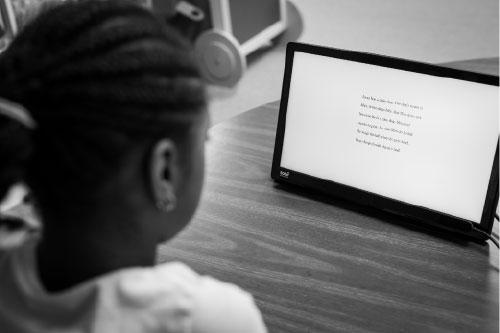
“When a child has learning challenges, the child has to invent new ways of understanding the world and communicating.” – Fredrik Wetterhall
Frederick, there are many new voice recognition technological tools – Grammarly, Speller, ClaroPDF, LearningAlly, Co:Writer – which level the playing field for kids and adults with learning disabilities. Do you think being dyslexic won’t handicap learners as much in years ahead?
These new tools, many of which are now free (i.e. Learning Tools from Microsoft) hold great promise for kids and adults who struggle with the printed word. It is exciting to live during a time when all of us can gain access to text and can write effectively in whatever way works best for each individual. While dyslexia will still influence the way a child learns to read and write, these new technologies will provide a greater variety of ways to communicate – which is great for us all.
Tom Cruise, Pablo Picasso, Steven Spielberg, Salma Hayek, Whoopi Goldberg, and many other celebrities struggled with reading difficulties. Dyslexia seems to be very common amongst successful people who are also considered very “creative”. Do you have any thoughts on that?
It is said that necessity is the mother of invention. When a child has learning challenges, the child has to invent new ways of understanding the world and communicating. My guess is that this contributes to a more creative approach to life in general.
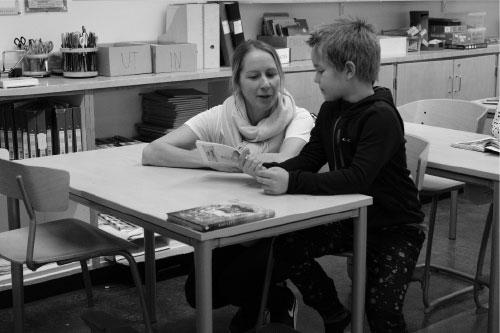
“It is exciting to live during a time when all of us can gain access to text and can write effectively in whatever way works best for each individual.” – Fredrik Wetterhall
Does Lexplore require specific data analytics background to understand the results? How user-friendly is Lexplore? How does it help educators make the most of the results?
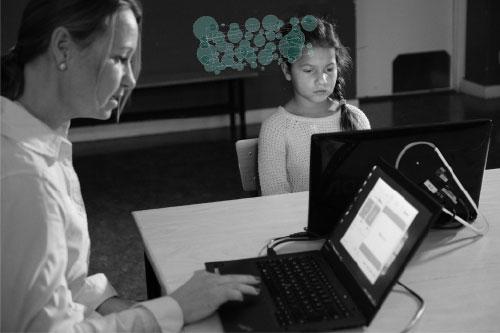
Lexplore was created for educators. It provides information to teachers and school leaders about students’ reading levels and makes recommendations for reading instruction. You can view the information on pupil, class, school and district levels. It also provides a way to visualize the cognitive process that is happening when a child reads. Teachers and parents report this helps them really understand the child’s struggles with reading. Teachers tell us that Lexplore is really fast, allowing them to assess each child in just a few minutes. They also tell us they appreciate its objectivity – there’s really no subjectivity in this test. That’s quite different from many other tools they currently use.
You’ve said that Lexplore is a screening tool, not a diagnostic tool. Would it be apt to call Lexplore an X-ray for Dyslexia?
We say that Lexplore provides “a clear view of reading.” It allows us to truly see how the child is reading and how the struggles of dyslexia impact the reading process. Since we use the eye gaze data, the information is not biased in any way and that’s why it really shows how you read.
How would you describe the results of the Galloway School case study? What did you learn about applying Lexplore to other schools?
Our experience at the Galloway School helped to validate our current version of the solution. We now provide an overall reading assessment that includes comprehension and recommendations for instruction. Teachers can share the portal with parents, complete with visualizations of the cognitive process, so all can get a clear view of a child’s reading abilities and struggles.
“We are at the embryonic stages of what Artificial Intelligence is capable of doing.” – Fredrik Wetterhall
You offer three models: a white glove package where company reps come to the school to conduct screenings; an option where schools purchase the hardware and software along with some support; and a do-it-yourself route that includes only the equipment. Is screening something that should only be done in schools?
We are finding that most schools want us to come and train their educators to use the solution so they can complete assessments on students whenever it makes the most sense for them. Generally, schools will assess all students in grades 1-4 once a year, and then conduct progress monitoring several times throughout the year. This allows them to deploy the right resources at the time for each student. After-school and tutoring organizations also use our solution in the same way.
What’s the roadmap to scaling Lexplore? What are the biggest challenges you face?
We are at the embryonic stages of what artificial intelligence is capable of doing. There are many different areas where we see a great deal of potential to develop the analysis further in terms of predictions, indicators, languages, ages, coordination with other data, etc. Imagine having at your disposal a 10-year longitudinal study on the reading development in your district or school where you can analyze initiatives, interventions and teaching methods, as well as compare data and results with other districts, states and countries to find positive examples of achievement. Data-driven decision-making promotes a successful and effective school that addresses the needs of all children and gives them access to the conditions needed to develop to their full potential.
We are excited about advances in eye-tracking technology and look forward to a time when eye-trackers come standard with every computer just as web cams do now. Not only will this help us scale Lexplore, it will make a variety of solutions more accessible to people with physical limitations. Our vision is to have a solution that can simply be downloaded and used by anyone who needs to assess reading ability. Eye tracking utilization is under constant development, and there is a great deal of research being performed on ADHD, ASD/autism and other neurological impairments. This will result in many new application areas for the technology.

C. M. Rubin and Fredrik Wetterhall

